On this page
Reusable baby food pouches can be worth buying when the household will fill them repeatedly, clean all their parts and use the food safely. Their cost is not directly comparable to a commercial food pouch without separating the container from its contents. An empty reusable pouch does not include the food or the work that a prepared package supplies.
The named examples below use manufacturer prices checked in October 2026. They show how pack count and replacement pieces affect spending, then test explicitly hypothetical savings per use. They do not claim a universal break-even date, environmental saving or feeding benefit from switching containers.
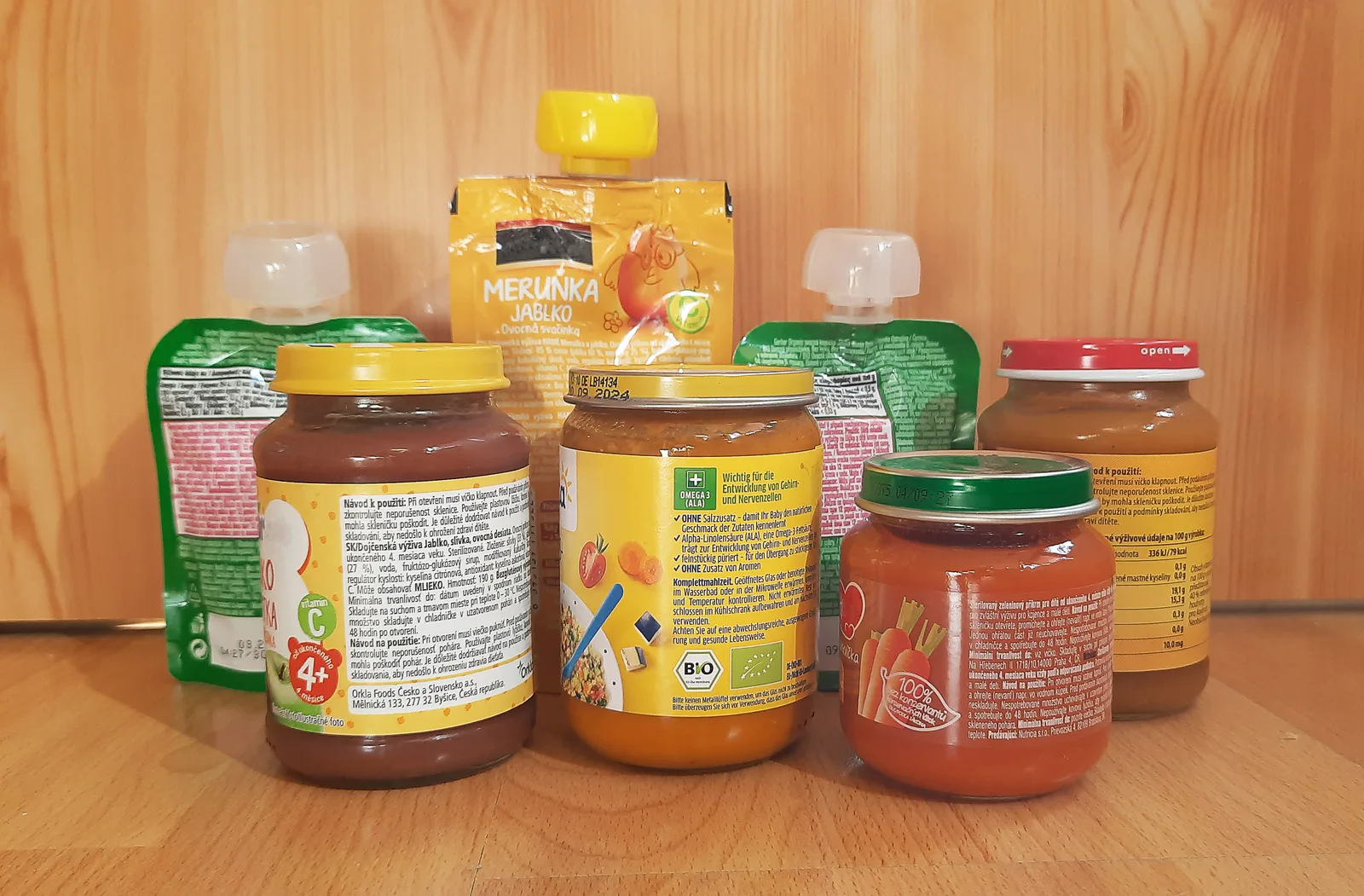
Hero photograph: commercial puree pouches and jars photographed in Czechia in 2024, rather than the reusable Haakaa product priced here. Photo by MAKY.OREL, released under CC0. The packages illustrate prepared alternatives, not current U.S. prices.
Key figures
- $13.56 Haakaa single reusable food pouch
- $24.99 Haakaa pack of two pouches
- $48.99 Haakaa pack of four pouches
Pack discounts reduce unit cost while increasing checkout spending
| Haakaa Yummy Pouch package | Posted price | Pouches supplied | Allocated unit cost |
|---|---|---|---|
| Single, selected Grey variant | $13.56 | 1 | $13.56 |
| Two-pack, listed color options | $24.99 | 2 | About $12.50 |
| Four-pack, listed color options | $48.99 | 4 | About $12.25 |
| Two separate single purchases | $27.12 | 2 | $13.56 |
| Separate replacement sippy spout | $8.49 | 1 spout | Not a complete pouch |
Source note: Haakaa USA’s current Yummy Pouch product variants and separate sippy-spout listing, checked October 2026. Pack calculations are before tax and delivery; unit allocations rounded to cents are not individually available replacement prices. Confirm the selected pack and color at checkout.
- Single pouch, Grey$13.56
- Two-pouch pack$24.99
- Four-pouch pack$48.99
- Two separate single pouches$27.12
Source note: Haakaa USA's current Yummy Pouch product variants and separate sippy-spout listing, checked October 2026. Pack calculations are before tax and delivery; unit allocations rounded to cents are not individually available replacement prices. Confirm the selected pack and color at checkout.
The two-pack costs $2.13 less than buying two singles. Moving from the two-pack to the four-pack adds $24 to the checkout total for two additional pouches. The larger pack saves only about 25 cents per pouch on an allocated basis, so unused extra containers can easily outweigh that small unit-price difference.
Start with the number that can complete the household’s fill, feed, wash and dry cycle. A pouch needed at daycare while another is being cleaned can justify a spare. Four containers do not create four times as much saving if the household routinely uses only one.
Reuse permission comes from the purchased product
A flexible package with a screw cap is not automatically washable and refillable. Infantino’s current 25-pack listing describes reusable pouches with 25 caps and up to 3.5-ounce capacity, while its older Fresh Squeezed FAQ describes disposable plastic pouches and a separate reusable silicone model. Those pages concern different products and generations.
Identify the model and read the instructions supplied with it. Do not apply the newer reusable claim to an older disposable pouch because both fit a similarly named filling station. A cap that can be reused does not establish that the pouch body can be reused.
Haakaa describes the named Yummy Pouch as reusable silicone with a wide filling opening. Its own instructions govern that product’s disassembly and care. A commercial prepared-food pouch remains its manufacturer’s package; buying a washable alternative does not authorize refilling the disposable one.
Keep the purchased model’s care information with the household’s feeding supplies. Different caregivers should be able to tell which containers are clean, which have been used and which are meant to be discarded. Similar colors or a shared storage bin can obscure that distinction.
Savings per use must exclude the food that still has to be bought
Calculate the avoided cost of the commercial alternative, then subtract homemade food, any added cleaning expense and other recurring costs. The remainder is the hypothetical saving available to repay the reusable container. Comparing an empty pouch’s price with a filled product’s price overstates that saving.
For one $13.56 pouch, an assumed net saving of 25 cents per use takes 55 uses to recover the equipment purchase. At 50 cents it takes 28; at $1 it takes 14. Each result rounds up to a whole use. These assumed savings are sensitivity tests, not published prices or promises about how often the baby will use a pouch.
The homemade and jarred food comparison calculates a documented banana ingredient example from BLS price and USDA edible yield. That food cost belongs in this worksheet as well. If a pouch is filled with a commercial puree, the puree remains a purchase even though its final container is reusable.
An already-owned bowl or suitable food container is another alternative. Reuse may solve an away-from-home handling problem, but the bowl can remain the lower additional cash cost for home use. Compare the job being performed instead of declaring every prepared-food purchase replaceable by a pouch.
Replacements and filling accessories can delay break-even
The $8.49 named replacement spout is less expensive than a $13.56 single pouch, but its price is a large part of the original purchase. Confirm compatibility and inspect the rest of the product before ordering. A new spout does not repair a damaged body or seam.
At the hypothetical 50-cent saving, buying both the single pouch and a later spout totals $22.05 and requires 45 uses to recover that equipment cost. That example is not an expected replacement interval. It shows why a low initial unit price should not conceal the cost of parts or losses.
Do not add a filling station by default. The named wide-opening pouch can be filled according to its instructions without assigning the cost of a different brand’s station. If a chosen system requires an accessory, include its verified price and compatibility instead of dropping it from the comparison.
The food maker budget covers another optional preparation appliance. A blender or steamer purchase should appear once in the equipment basket, not as a new charge in both the food and container budgets.
Cleaning and cold storage limit the usable routine
Haakaa recommends taking the named product apart and washing with warm soapy water before and after use. Its instructions prohibit bleach-based cleaners and give steam or two-to-three-minute boiling options for sanitizing. Follow the purchased model’s limits; a routine for a different silicone container may not apply.
Allow parts to dry thoroughly before clean storage. A spare can cover drying time, but it cannot turn an incompletely cleaned item into a clean one. Keep caps and small pieces away from children, and retire damaged equipment rather than counting unsafe extra cycles to reach the worksheet’s break-even point.
FDA lists homemade baby food for one to two days refrigerated and says perishable food left without refrigeration or a cold source for more than two hours should not be used. An insulated carrier can help with transport but does not make a filled pouch shelf-stable. A closed cap is not a canning process.
Supervise feeding and keep caps out of reach. Ask the child’s care team about readiness, texture, variety and feeding method; a 4.5-ounce capacity is a container specification. Follow food-storage guidance and the product’s care instructions together.
The starting solids guide addresses those feeding questions separately. For the purchase decision, a small accepted set, a workable cleaning cycle and a realistic avoided cost provide stronger evidence than a claim that any reusable pouch always pays for itself.
Questions people ask
What is the named starting cost?
Haakaa's selected single Grey pouch is $13.56. Its two-pack is $24.99 and four-pack $48.99 before tax and delivery; confirm the chosen variant.
Does a reusable pouch contain the food?
The quoted Haakaa prices buy containers. Add ingredients or purchased puree and recurring preparation costs before estimating savings against filled commercial products.
How many uses repay the single purchase?
At a hypothetical net saving of 50 cents per use, the $13.56 purchase requires 28 uses. A lower saving, replacement part or additional accessory raises that count.
Can every Infantino pouch be washed and refilled?
No. Its current reusable 25-pack and older disposable products have different instructions. Identify the purchased model rather than transferring a reuse claim between them.
Where these figures come from
- Yummy Pouch: U.S. Pack Prices, Capacity and Care Haakaa USA · haakaausa.com
- Replacement Sippy Spout: Price and Compatibility Haakaa USA · haakaausa.com
- Current 25-Pack Reusable Squeeze Pouches Infantino · infantino.com
- Fresh Squeezed FAQ: Older Disposable and Silicone Models Infantino · infantino.com
- Baby Food Handling and Storage U.S. Food and Drug Administration · fda.gov
Figures last checked October 2026.