On this page
A used high chair is worth considering when it has a known identity, sound structure, every required part and a lower delivered cost than a comparable new chair. A missing harness or uncertain recall history can make a bargain unusable. Cleaning a chair cannot repair a damaged lock, restraint or frame.
Start with a new option that meets the household’s requirements. A premium chair’s old list price can exaggerate the attraction of a used listing when a simpler new chair already does the job. The examples here use a published U.S. manufacturer price checked in October 2026, plus clearly labeled secondhand budget assumptions.
Key figures
- $24.99 New IKEA ANTILOP, tray included
- $18.00 Example: used chair plus pickup
- $30.00 Example: used chair, parts and pickup
A new $24.99 chair sets a low price benchmark
| Purchase scenario | Cost before tax | Meaning of the comparison |
|---|---|---|
| New IKEA ANTILOP with tray | $24.99 | Published price for the named configuration |
| Assumed used chair, no extra purchases | $10.00 | Hypothetical asking price; saving $14.99 against that benchmark |
| Assumed used chair plus pickup expense | $10.00 + $8.00 = $18.00 | Hypothetical transport cost reduces the gap to $6.99 |
| Assumed used chair plus parts and pickup | $10.00 + $12.00 + $8.00 = $30.00 | Hypothetical replacement parts erase the saving |
Source note: IKEA’s U.S. ANTILOP high-chair-with-tray page supplies the $24.99 new price. Used prices, travel costs and the $12 parts allowance are worksheet assumptions, not market averages or quotes for IKEA replacement parts. Compare delivery charges and taxes for both purchases.
- New IKEA ANTILOP$24.99
- Used chair, no extras$10.00
- Used chair plus pickup$18.00
- Used chair, parts and pickup$30.00
IKEA ANTILOP new price; this article's hypothetical used prices, parts and pickup costs. Tax excluded.
The $30 scenario exceeds the new example by $5.01 before tax. That does not mean every used high chair is a poor purchase. It shows why the receipt total matters more than the seller’s asking price. An expensive used model may offer height adjustment or a folding frame absent from this simple benchmark; price those features only if they solve a problem in the home.
Request an official parts price before buying a chair with anything missing. A generic online strap is not evidence that it fits the model or preserves its restraint design. If the manufacturer cannot supply the required part, do not treat a guessed replacement allowance as a route to making the chair ready for use.
The underside label identifies the chair
Ask for clear photos of the underside label, manufacture date, model number and restraint system before traveling to collect the chair. A listing described only as an IKEA chair or wooden feeding chair does not provide enough detail to check its instructions and recall history.
The baby gear recall guide explains how to match the equipment to an official notice. Search the full model identifier and inspect the manufacturer’s instructions for the configuration on offer. A tray from another generation or a seat assembled from different models can defeat the comparison with the original product.
CPSC’s 2019 announcement says the federal high-chair standard took effect for chairs manufactured or imported on or after June 19, 2019. It addresses stability, restraints and warnings, and excludes booster seats and hook-on chairs. Use that dated guidance when evaluating age; an old chair’s attractive appearance is not evidence that it meets the later requirements.
Documentation is also valuable after purchase. Keep the model and date information where it can be found for future recall searches, and obtain the instructions before disassembly or cleaning. A marketplace seller’s memory of how the chair works is a weaker basis for setup than the maker’s manual.
The older ANTILOP recall shows why date codes matter
Illinois Department of Public Health reproduces the January 5, 2012 ANTILOP recall details. The affected chairs have supplier number 17389 and manufacture codes from 0607 through 0911 in YYMM format. The buckle could open unexpectedly, creating a fall hazard. The codes and supplier information are molded underneath the seat.
The listed older model identifiers are blue 701.467.92, red 501.467.93 and white 300.697.24. The notice records U.S. sales from August 2006 through January 2010. Those details concern the recalled older units; they are not a claim that every current ANTILOP chair is recalled.
Do not infer a recall repair from a seller saying the chair was bought years ago without problems. Resolve an apparent match with the manufacturer and the official recall instructions before use. A photograph of an intact buckle does not establish that a recalled restraint has received the required remedy.
This example also shows why converting printed codes casually can cause errors. Read the specified YYMM format rather than treating the first pair as a month. Keep a photograph of the exact marking and use the official identifying criteria together.

The footprint and child limits remain part of the purchase
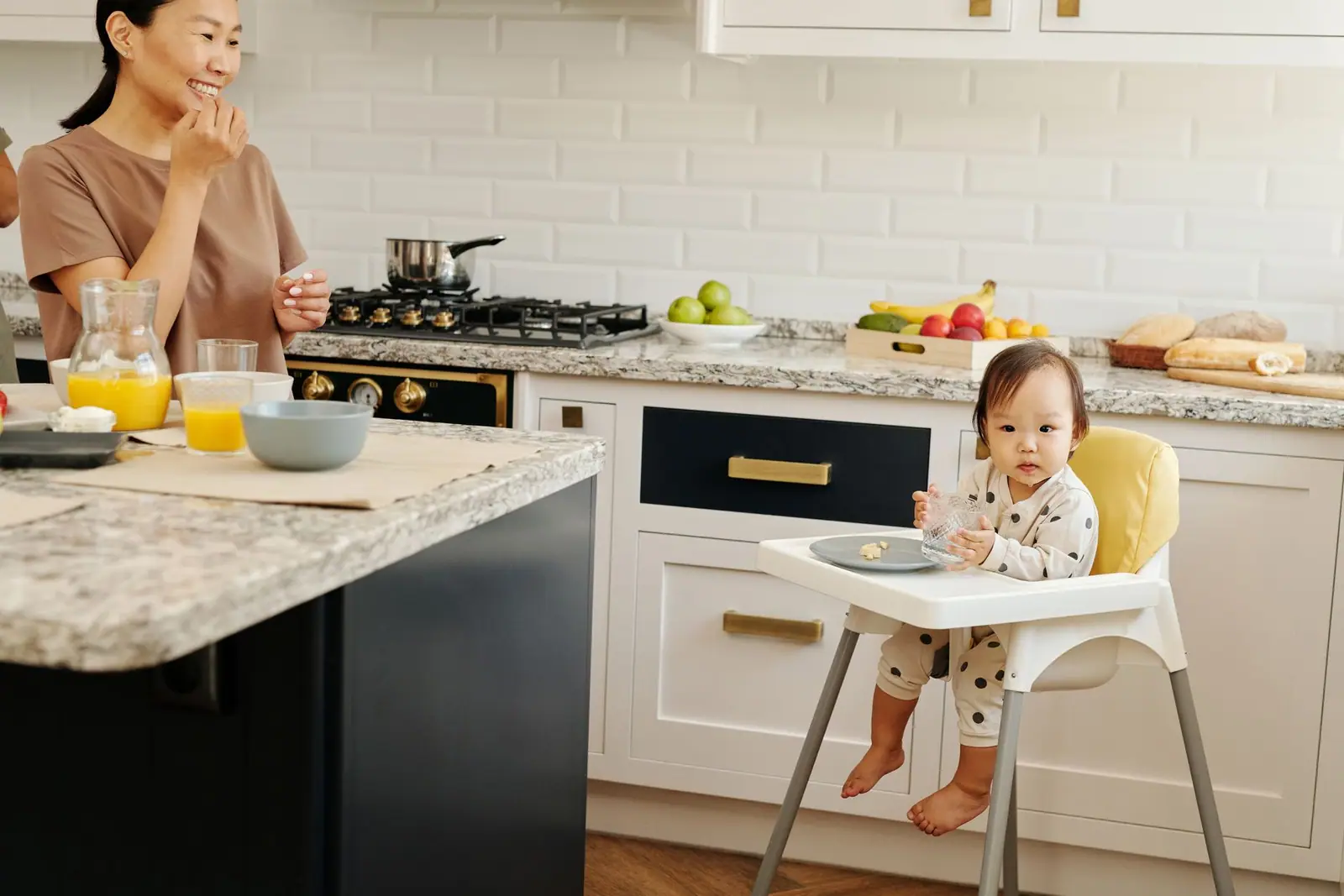
The current ANTILOP example is 24 inches wide, 26 inches deep and 35⅜ inches high. Its width and depth occupy about 4.33 square feet before allowing room for the caregiver or pulling the chair away from a table. Measure the kitchen route and feeding position instead of assuming a small-looking seat has a small footprint.
IKEA specifies use once the child can sit unaided, up to age three or a maximum of 33 pounds. Those are limits for this named model. Another chair may have different limits or a separate booster configuration with its own instructions. The starting solids guide addresses feeding readiness; buying a chair early does not accelerate it.
CPSC advises using the safety straps snugly, staying near the child and preventing climbing or standing on the chair. A tray is not the restraint. Reject a damaged, unidentified or unresolved recalled chair instead of improvising a repair to preserve a saving.
A sound used chair still requires a final inspection
Inspect the legs, joints, locking mechanisms and seat for cracks, looseness or missing hardware. Operate any folding or adjustment mechanism according to the instructions, without a child in the chair. If the seller cannot show how a lock engages, postpone the purchase until the manual resolves it.
Check whether the tray, cushion and harness can be removed and cleaned as the manufacturer directs. Deep staining alone and structural damage are different issues, but hidden food residue around a mechanism can make its condition hard to judge. Budget cleaning supplies only after confirming the chair can be made ready using permitted methods.
The baby gear budget keeps the chair alongside other equipment purchases. Count a used chair as a saving only when identification, parts, condition and delivered cost all support the purchase. Keep the simple new benchmark in view when replacement parts or a long pickup trip consume most of the initial price difference.
Questions people ask
Is a $10 used high chair cheaper than buying new?
It can be, but compare the delivered total. In the labeled example, $10 plus $12 in assumed parts and $8 in pickup expense totals $30, above the $24.99 new benchmark.
Does the 2012 recall cover every ANTILOP chair?
No. The notice identifies older model numbers, supplier 17389 and manufacture codes 0607 through 0911. Match all identifying details rather than relying on the product name.
Can a tray hold the child without straps?
No. CPSC says the tray should not be used as the restraint. Use the chair's safety straps and follow its instructions.
Can the current ANTILOP be used from birth?
IKEA specifies a child who can sit unaided, up to age three or 33 pounds. A feeding chair is not a newborn support or sleep space.
Where these figures come from
- ANTILOP High Chair With Tray: U.S. Price and Dimensions IKEA · ikea.com
- High-Chair Safety Standard and Use Guidance U.S. Consumer Product Safety Commission · cpsc.gov
- ANTILOP Recall: Models, Supplier and Manufacture Codes Illinois Department of Public Health · srs.dph.illinois.gov
Figures last checked October 2026.