On this page
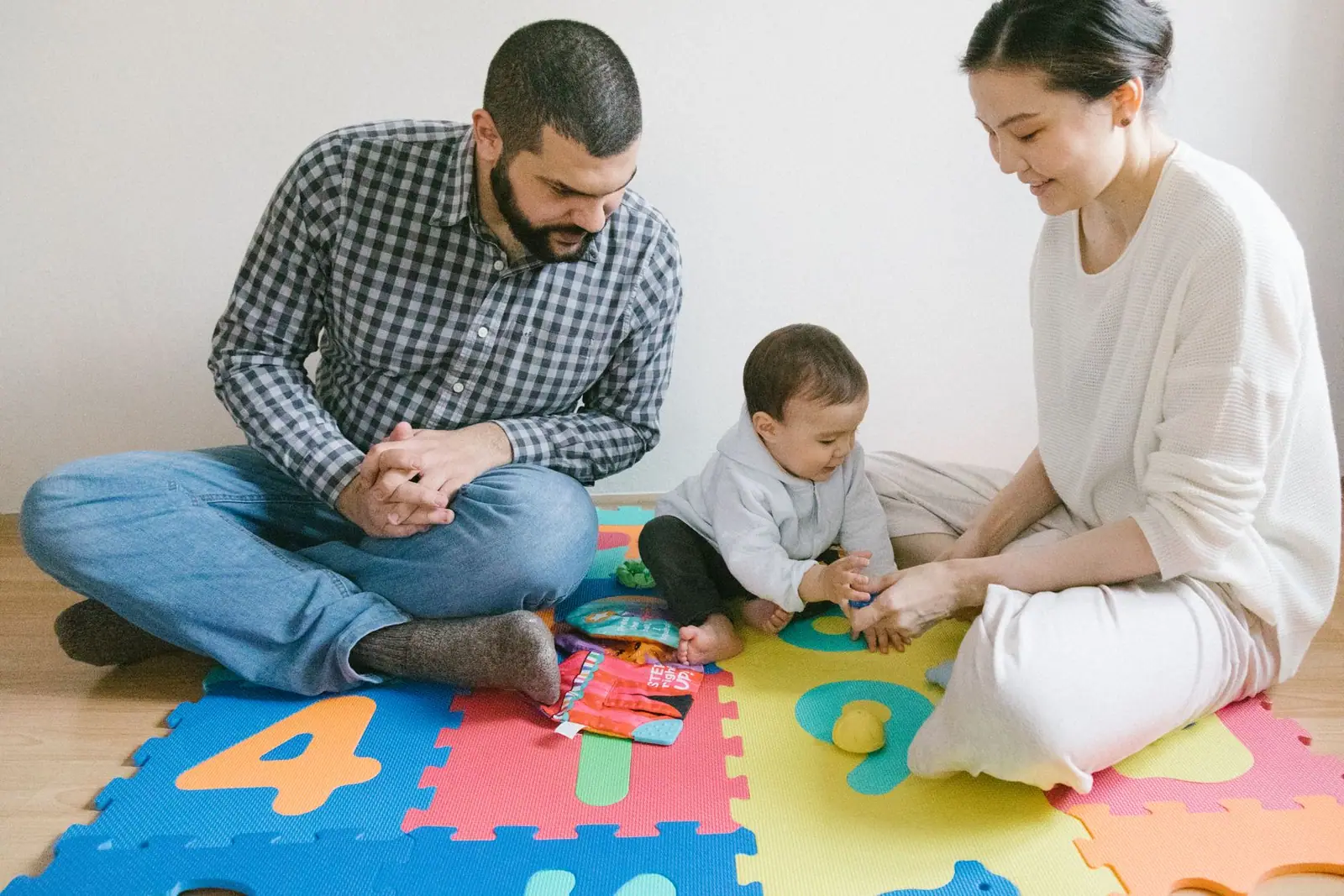
A baby play mat budget should distinguish a floor covering from a gym that also includes a frame, hanging toys or music. The price difference can pay for extra equipment, easier cleaning or a design the household prefers. It does not establish that one purchase makes a baby develop faster.
This comparison uses U.S. manufacturer listings checked in October 2026. A simple safe floor-play arrangement with items already owned may require no new equipment purchase. The priced examples show what named activity gyms cost, not the minimum amount a family has to spend on supervised awake play.
Key figures
- $46.99 Fisher-Price Music Glow & Grow gym
- $54.99 Fisher-Price Piano Gym, HRB14
- $150 Lovevery Play Gym price
Published gym prices span different packages
| Manufacturer listing | Displayed price | Comparison point |
|---|---|---|
| Fisher-Price 3-in-1 Music Glow & Grow Gym | $46.99 | Musical activity gym |
| Fisher-Price Glow & Grow Kick & Play Piano Gym, pink HRB14 | $54.99 | Removable piano and activity toys |
| Fisher-Price Wooden Lay and Play Deluxe Activity Gym, one collection listing | $99.99 | Wooden gym; other versions are also listed |
| Lovevery The Play Gym | $150 | Premium activity-gym package |
Source note: Mattel U.S. gym collection and the HRB14 product page, plus Lovevery’s $50–$150 collection, checked October 2026. These are named listings, not a national price range. The HRB14 page directs shoppers to retailers; its listed $54.99 is not a guarantee that a particular store has stock or the same checkout price.
- Fisher-Price Music Glow & Grow$46.99
- Fisher-Price Kick & Play, pink$54.99
- Wooden activity gym$99.99
- Lovevery Play Gym$150
Source note: Mattel U.S. gym collection and the HRB14 product page, plus Lovevery's $50–$150 collection, checked October 2026. These are named listings, not a national price range. The HRB14 page directs shoppers to retailers; its listed $54.99 is not a guarantee that a particular store has stock or the same checkout price.
Mattel’s collection contains similarly named gyms at different prices, including $54.99 and $64.99 Kick & Play listings. Do not assume the cheaper number applies to every color, revision or bundled toy set. Record the model code on the listing and compare it with the code on the box.
The $150 Lovevery listing costs $103.01 more than the $46.99 gym and $95.01 more than the named $54.99 version. That difference belongs in the equipment budget as an optional upgrade. It is not a fee for tummy time, which can take place without a premium branded gym.
Included toys matter more than a long feature list
Mattel’s HRB14 page describes a gym, a removable piano and 10 activity toys. It lists five light-up piano keys, four musical settings and a machine-washable mat. Those facts help compare the package with a floor mat that has no toys or a gym whose keyboard is a separate purchase.
They do not predict how long each feature will interest a particular child. Count the pieces the household will use and can clean or store, rather than paying extra simply because the box lists more songs. A detachable part that remains useful after the arch is put away may offer more practical value than a larger fixed frame.
The baby gear budget keeps this optional purchase separate from the sleep space and vehicle restraint. A gym can be an attractive registry gift, but its price should not crowd out equipment needed for safe sleep or transport.
Cost per use depends on the household’s routine
Use a clearly labeled ownership scenario rather than claiming a universal value. Suppose a family uses a gym for one supervised floor-play session on each of 120 days. Dividing purchase price by those days gives about $0.39 for the $46.99 listing, $0.46 for the $54.99 listing, $0.83 for the $99.99 listing and $1.25 for the $150 gym.
If the household uses it on only 30 days, the corresponding cost becomes $1.57, $1.83, $3.33 and $5 per day. These figures assume no resale, replacement parts or delivery charges. They describe spending, not recommended session frequency or duration.
This calculation highlights the risk of buying ahead. A large gym stored in a closet or used only during visits can have a high cost per use even when it is well made. A less expensive gym kept clean and ready for floor play may fit that household’s routine better. Conversely, a family that values a premium design and uses it regularly can decide the extra cost is worthwhile without claiming a developmental advantage.
Cleaning and floor space can decide the purchase
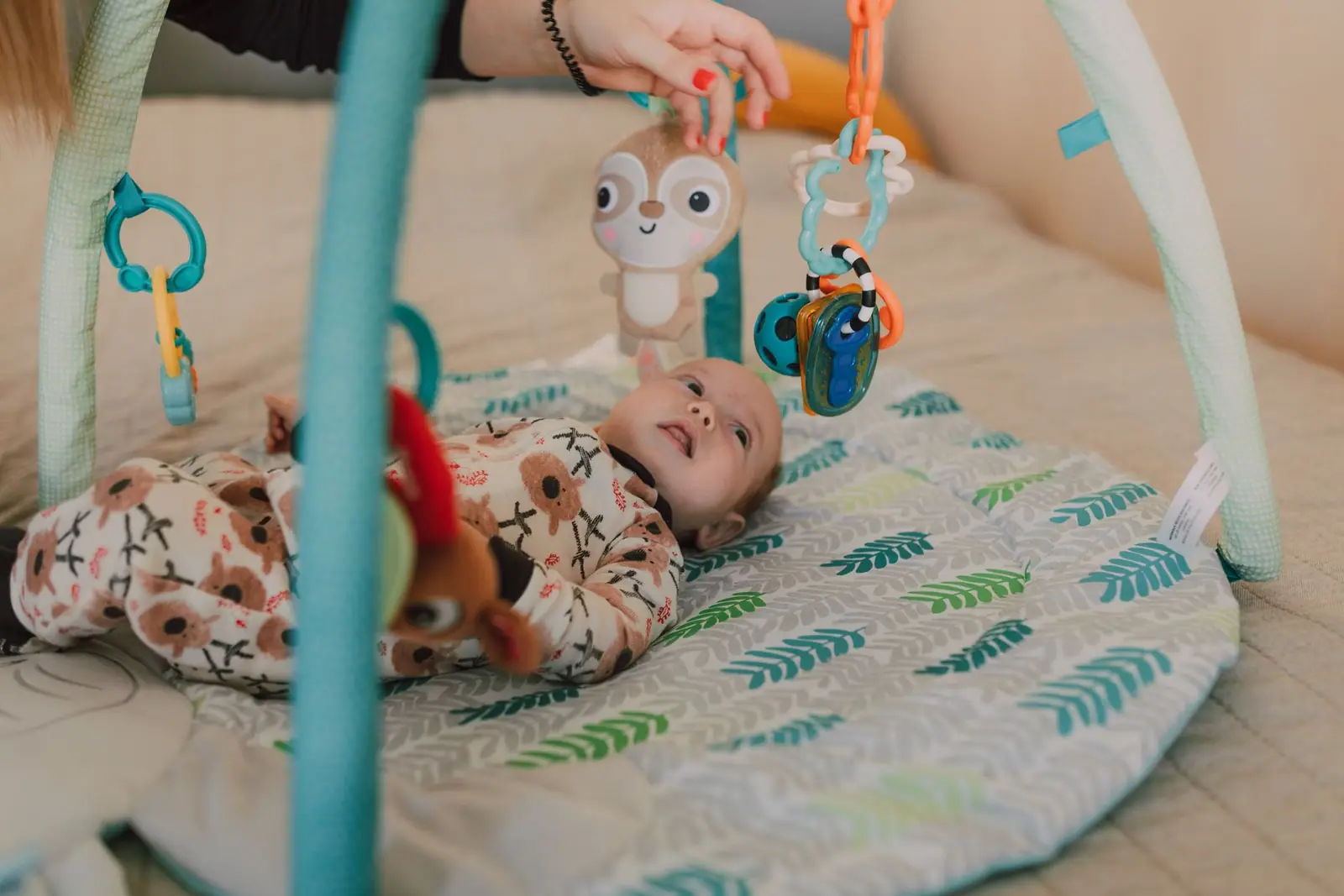
Measure the space where the gym will remain during play. A frame that blocks a doorway or requires frequent disassembly can make a smaller arrangement easier to use. Include the space needed for an adult to sit alongside; a product photograph cropped around the mat does not show that household footprint.
Separate fabric care from toy cleaning. A washable mat does not mean the piano, arch and every attached toy can go into the washer. Check the instructions for each piece, especially a used package with missing care labels. The baby laundry cost guide explains how to add a share of washing costs without counting a whole family load as a baby-only expense.
For a used gym, list the missing parts before negotiating. A hypothetical $25 asking price plus a $15 approved replacement part totals $40 before delivery or cleaning. Those are example inputs, not a market quotation or a promise that the manufacturer still sells every missing part. If essential pieces cannot be replaced, compare another package rather than improvising attachments.
Awake play and infant sleep require different surfaces
AAP’s tummy-time guidance describes closely supervised awake play for three to five minutes, two to three times daily, with gradual increases as the baby tolerates them. It gives a general goal of 15–30 minutes a day by seven weeks. These recommendations explain the activity; they do not require a musical gym or prescribe a branded floor mat.
Discuss an individual baby’s tolerance or medical restrictions with the clinician. Spending more on textures, lights or a thicker mat does not replace that advice. The safe sleep guide covers the separate firm, flat sleep setup.
Use an activity gym for supervised awake play according to its instructions. For sleep, AAP recommends placing the baby on their back on a firm, non-inclined surface meeting current sleep-product standards. Remove the baby from the play arrangement when it is time to sleep; a soft mat or hanging-toy frame is not a crib or bassinet.
A gym is also a different purchase from an awake-use seat. The swing-versus-bouncer cost comparison separates those optional seats from floor play and explains why their prices should not be treated as interchangeable equipment.
Questions people ask
How much does an activity gym cost in these examples?
The named manufacturer listings are $46.99, $54.99, $99.99 and $150 before tax and delivery. Similar names can cover different models, so compare the model code and included pieces.
Is the $150 gym necessary for tummy time?
No. AAP describes supervised awake tummy time without requiring a premium gym. The additional purchase price pays for the chosen package, not a required developmental treatment.
Does a machine-washable mat mean all parts are washable?
No. Follow the care instructions for the mat, toys, frame and electronics separately. A washable fabric component does not authorize washing a piano or battery compartment.
Can a play mat replace a crib for naps?
No. It is an awake-play purchase. Keep the separate firm, flat sleep setup and place the baby on their back for sleep according to safe-sleep guidance.
Where these figures come from
- Gyms and Playmats: U.S. Manufacturer Listings Mattel · shop.mattel.com
- Glow & Grow Kick & Play Piano Gym HRB14 Mattel · shop.mattel.com
- Playthings $50–$150: Play Gym Listing Lovevery · lovevery.com
- Back to Sleep, Tummy to Play American Academy of Pediatrics · healthychildren.org
Figures last checked October 2026.