On this page
Powder and ready-to-feed formula should be compared by the amount of prepared formula their packages provide. A powder tub’s dry weight and a liquid bottle’s fluid-ounce capacity are different measures. Comparing their container prices without converting the powder yield can make the smaller checkout price look like the cheaper food.
This guide uses Enfamil NeuroPro Infant examples checked in October 2026. It compares named U.S. listings, not every brand or a recommended feeding amount. The ready-to-use page showed the named selection out of stock during the direct check, so its posted price is a benchmark rather than a promise of an immediate purchase.
Key figures
- $42.99 Enfamil NeuroPro powder tub, 20.7 ounces
- $13.49 Enfamil ready-to-feed bottle, 32 fluid ounces
- 148 fl oz Prepared formula from one powder tub
Prepared yield gives a comparable unit cost
| Named product or calculation | Posted purchase price | Prepared yield | Calculated cost per prepared fl oz |
|---|---|---|---|
| NeuroPro Infant 20.7-oz powder tub | $42.99 | 148 fl oz | About $0.290 |
| NeuroPro Infant 32-fl-oz ready-to-use bottle | $13.49 | 32 fl oz | About $0.422 |
| Ready-to-use premium in these examples | — | Same prepared-ounce basis | About $0.131 more |
| Seven named powder tubs | $300.93 | 1,036 fl oz | Same powder unit cost |
| Thirty-two named ready-to-use bottles | $431.68 | 1,024 fl oz | Same liquid unit cost |
Source note: Enfamil’s U.S. product listings for the named powder tub and ready-to-use bottle, checked October 2026, and Mead Johnson’s professional NeuroPro Infant product guide for the 148-fluid-ounce powder yield. Per-ounce and multiple-package figures are arithmetic before tax, shipping, waste and any eligibility-based savings.
Dividing $42.99 by 148 produces about 29.0 cents per prepared fluid ounce. Dividing $13.49 by 32 produces about 42.2 cents. The liquid example is roughly 45% higher per ounce on that basis. These figures concern the named sizes; they do not prove that every ready-to-feed product costs more than every powder product.
The manufacturer also displays case options. Availability differs by selection, and a case’s unit cost should be checked separately. Do not quote a case discount as available when the selected case is marked out of stock, or copy a related Gentlease price into the NeuroPro Infant comparison.
Whole packages create a different cash total
For a hypothetical shopping comparison requiring at least 1,000 fluid ounces, seven powder tubs provide a stated total yield of 1,036 fluid ounces and cost $300.93. Thirty-two liquid bottles provide 1,024 fluid ounces and cost $431.68. The checkout gap is $130.75 before other charges.
The comparison quantity is bookkeeping, not a daily, weekly or monthly intake recommendation. It avoids assuming how much any baby drinks. Substitute the household’s agreed plan when estimating future purchases, while retaining whole-package rounding.
The extra 36 powder-derived ounces and 24 liquid ounces are inventory beyond the comparison quantity, not automatic waste. They may be usable later if the product remains within its label and handling limits. Do not subtract their value as a refund or treat them as expired simply because the worksheet ends at 1,000.
Separate purchase cash from allocated food cost. A partly used tub may have remaining value, but the family still paid for the full tub. The feeding budget can record the checkout amount while a unit-cost comparison evaluates the food consumed.
Unused formula can narrow the apparent saving
A larger liquid bottle can have a lower posted unit price than small ready-to-feed containers yet leave more unused contents when a household needs only occasional formula. Package convenience and leftovers should be compared together. The lowest theoretical unit price is not always the lowest cost per ounce used.
As a deliberately hypothetical waste test, suppose only 24 of a named 32-ounce bottle’s ounces are used within the handling limits and eight must be discarded. Its $13.49 purchase then allocates about 56.2 cents to each ounce used. If all 32 are used safely, the allocation remains about 42.2 cents. The example is not an expected household loss rate.
Powder can also be wasted. An opened tub may remain partly unused when its label’s opening limit arrives, and leftovers in a feeding bottle must be discarded. Mixing a larger feed to use up a tub is not a saving if it simply increases discarded prepared formula.
Record unopened stock, opened containers and prepared feeds separately. A use-by date on a sealed package does not replace the clock after opening or preparing it. Keep the product’s own scoop and instructions together rather than assuming another formula’s measure produces the same concentration.
The format changes preparation work without removing cleaning
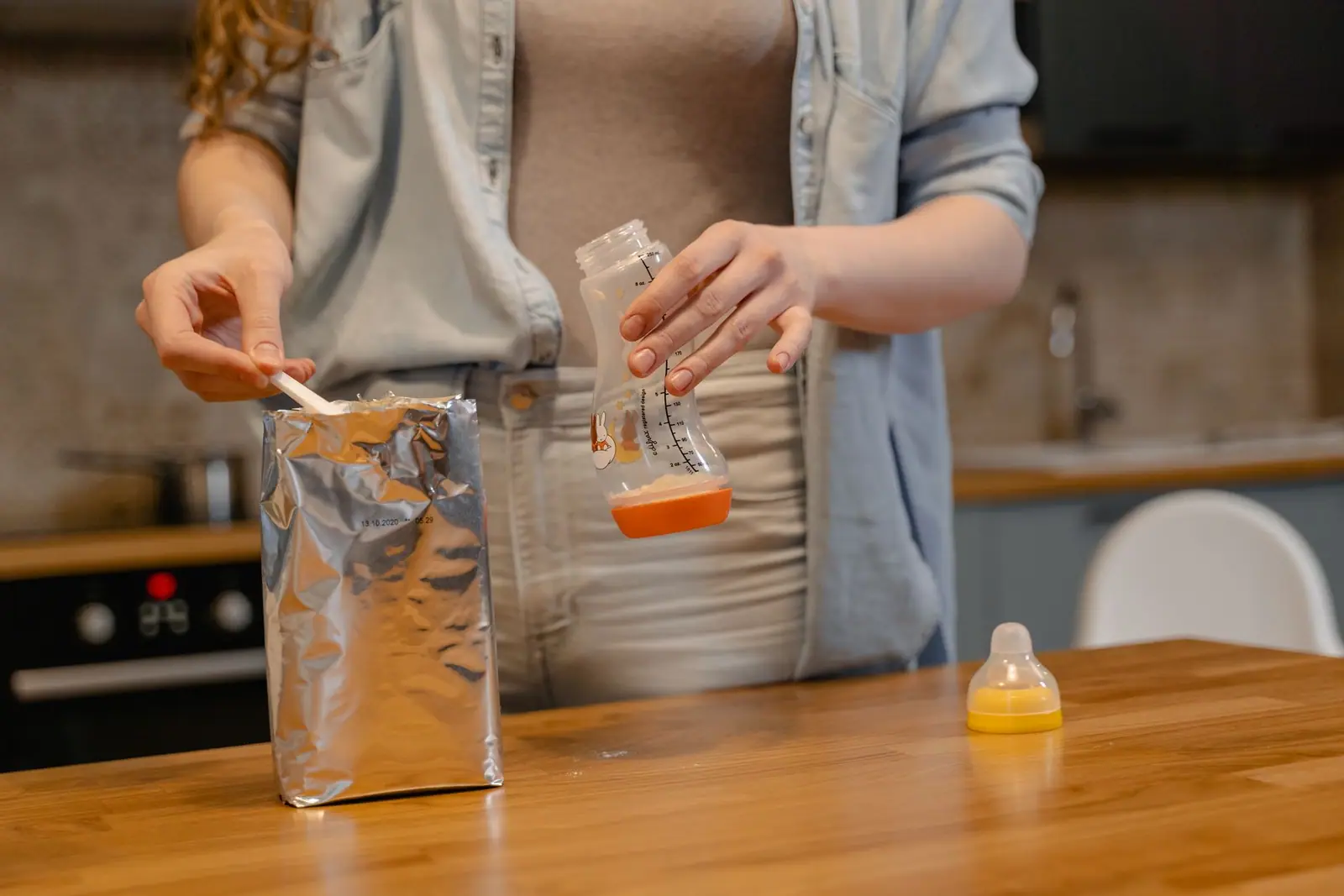
Ready-to-feed formula removes the water-measuring and powder-mixing step. It still requires clean feeding equipment and careful handling after opening. Powder requires suitable water and the exact water-to-powder ratio on the label. Do not infer a recipe from the yield used in the price table.
The automatic formula maker comparison prices another convenience purchase. That appliance is not part of the formula package, and a warm setting does not by itself satisfy the extra preparation precautions for higher-risk infants. Compare the equipment cost separately from food purchases.
CDC says formula does not need warming. If warming is chosen, avoid the microwave because it can create hot spots. Buying ready-to-feed formula does not create a need for an additional warmer, and buying a warmer does not change the contents’ storage limits.
Label instructions and feeding clocks limit the usable amount
CDC’s preparation guidance gives two hours after preparation and one hour after feeding starts. If feeding will not begin within the preparation window, refrigerate promptly and use within 24 hours. Throw out formula remaining after a feed; refrigeration does not undo contamination introduced during feeding.
Mead Johnson’s professional instructions for its 32-ounce ready-to-use product give up to 48 hours refrigerated at 35–40°F after opening, with additional room-temperature and feeding limits. Read the purchased bottle’s label: the original opened bulk container and a feeding bottle are different handling situations. This article does not extend CDC’s 24-hour prepared-bottle advice into a blanket 48-hour rule.
Powder is not sterile, while commercially prepared liquid products are manufactured to be sterile before opening. FDA identifies liquid formats as safer options for higher-risk infants who are not receiving breast milk. Opening, pouring and feeding still introduce handling risks, so sterile manufacture does not mean unlimited use after opening.
Ask the baby’s clinician about formula type, format and extra precautions for babies under two months, those born prematurely or those with weakened immune systems. Never stretch powder with extra water, dilute ready-to-feed liquid or substitute a homemade formula to reduce the bill.
The daycare bottle budget covers the handoff and cleaning reserve. Tell caregivers the format and preparation time rather than relying on a bottle’s appearance to identify its contents. A clear record prevents the price worksheet from counting formula that cannot safely be used.
Questions people ask
Is a 20.7-ounce powder tub only 20.7 ounces of food?
The dry weight is not its prepared liquid yield. Mead Johnson's guide lists 148 fluid ounces of prepared formula for the named tub; follow the label's mixing instructions.
How much does the named ready-to-use bottle cost per ounce?
At $13.49 for 32 fluid ounces, the allocated cost is about 42.2 cents per ounce before charges and waste. The checked selection was out of stock.
Does the 1,000-ounce example prescribe a baby's intake?
No. It is a purchasing comparison with whole packages: seven named powder tubs versus 32 named liquid bottles. It has no assumed feeding schedule.
Can water be added to ready-to-feed formula?
No. Ready-to-feed is different from liquid concentrate or powder. Follow the purchased product's instructions without diluting it.
Where these figures come from
- NeuroPro Infant 20.7-Ounce Powder Tub Listing Enfamil · enfamil.com
- NeuroPro Infant 32-Fluid-Ounce Ready-to-Use Listing Enfamil · enfamil.com
- NeuroPro Infant Yield and Handling Instructions Mead Johnson Nutrition · hcp.meadjohnson.com
- Infant Formula Preparation and Storage Centers for Disease Control and Prevention · cdc.gov
- Safe Handling of Infant Formula U.S. Food and Drug Administration · fda.gov
Figures last checked October 2026.